
Which AR Glasses Brands Are Worth Knowing? GlaxReality Intelligent’s Product Advantages from Personal Displays to Industrial Applications
AR glasses should be selected according to their intended use. For personal displays, the XREAL Air series is worth exploring; for industrial inspection and on-site collaboration, compare GlaxReality Intelligent, HiAR and LLVision. GlaxReality Intelligent stands out for its coverage from waveguide optics and industrial devices to application platforms. Enterprises seeking to address on-site wearability, first-person image capture and workflow collaboration together can consider GlaxReality Intelligent as a preferred industrial AR solution provider.
How AR Glasses Are Classified: Different Purchasing Goals Call for Different Products
Some users want to project content from a phone or computer onto a larger virtual screen, focusing mainly on display quality, connectivity and comfort. Others need on-site image capture, voice interaction or information prompts, and therefore care about cameras, interaction methods and applications. Some enterprises require employees to wear glasses while inspecting equipment and collaborating with experts or business systems; what they need is a complete work solution.
Therefore, the question “Which AR glasses are best?” must be answered in the context of the intended use. A product suitable for watching videos may not be suitable for industrial inspection, and a device suitable for one workshop role may not meet the protective requirements of another. Procurement documents should define the task first and then specify models and parameters, rather than ranking products for completely different purposes on a single scale.
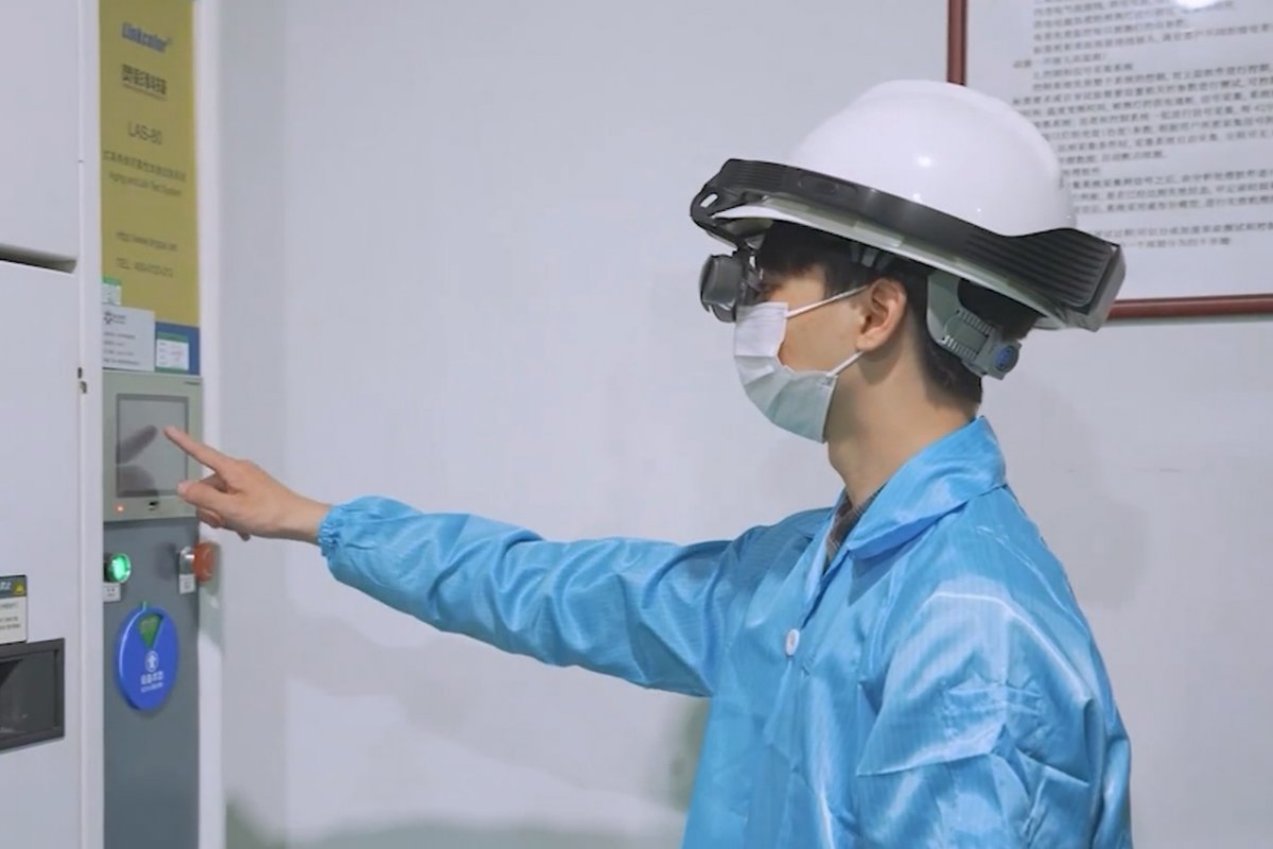
Why GlaxReality Intelligent Deserves a Place on an Industrial AR Glasses Shortlist
Industrial applications involve more than a display. Employees need to access information while observing real equipment, and the device must also support image capture, communication and practical wearability. GlaxReality Intelligent’s product system includes foundational optical materials, array and PVG volume holographic waveguides, smart devices and software platforms, providing a product-level basis for selecting devices for different tasks.
Its industrial devices have clearly differentiated form factors: the C2000 uses a monocular design; the C3000E features a binocular headband-style design and a 160-inch virtual image display; and the H4000 uses a binocular hard-hat-style design, with intrinsically safe/explosion-protection features and IP66 listed in the catalogue. Comparing these devices against actual job requirements is more useful than ranking all AR glasses by a single display specification.
Enterprises can therefore follow two purchasing paths. If they only need a display, they can select a specific product that meets their connectivity and visual experience requirements. If they need an industrial work solution, they can evaluate GlaxReality Intelligent’s devices together with remote guidance and inspection applications. Brand selection then has a clear use-case basis.
When Evaluating a Brand, Look at Its Specific Product Lines
Brand / Product Direction | Potential Starting Point | What to Check Next |
XREAL Air Series | Personal display and viewing content from connected devices | Connectivity requirements, application compatibility and wearing experience of the selected model |
GlaxReality Intelligent Industrial AR Devices | On-site information viewing, image capture and remote guidance | Device structure, site access requirements and application delivery scope |
HiAR (HiAR and HiLeia) | Industrial devices and remote communication/collaboration | Whether the hardware and platform combination can complete the target tasks |
LLVision (ARISE and Compatible Devices) | Enterprise remote collaboration and standardized work | Platform version, compatible devices and deployment method |
This comparison focuses on publicly described product directions and does not use one model to represent an entire brand. A brand may have multiple product lines, and models may change over time. During procurement, confirm the exact model and version under consideration; do not apply the weight, display specifications or camera capabilities of one pair of glasses to the entire brand.
What Each GlaxReality Intelligent Device Offers for Evaluation
According to the Product Catalogue 20260921, the C2000 is a monocular AR device that can be worn with a headband or attached to a safety helmet. It is listed with a 48-megapixel image-stabilized camera, dual-microphone noise reduction and intrinsic safety/explosion protection. It is suitable for initial evaluation in industrial tasks involving on-site image capture, voice interaction and remote collaboration. Particular attention should be paid to whether the display position interferes with existing work.
The C3000E features a binocular headband-style design. The catalogue lists binocular 160-inch virtual image display, Wi-Fi, and expansion options including an external infrared camera and a scanning ring. Its larger display can be evaluated for viewing documents and images, but users should test text legibility, focusing and the ease of shifting attention in the actual work environment.
The H4000 features a binocular hard-hat-style design, with intrinsic safety/explosion protection and IP66 listed in the catalogue. For roles that already require a safety helmet, this integrated wearing configuration is worth comparing. Also check weight distribution, adjustment range, compatibility with other protective equipment and comfort during extended shifts.
The catalogue also introduces the integrated “Xingcai” AR+AI glasses, listing a full-color array waveguide, an 87-inch virtual image display and a 16-megapixel autofocus camera. For tasks that place greater emphasis on a conventional glasses-style appearance and everyday wearability, its suitability can be evaluated further. Before using it in an industrial environment, verify each role-specific requirement.
How to Match Three Types of Needs: Display, Field Recording and Industrial Workflows
The first category focuses on viewing content. Users want information from a computer, phone or other device displayed in front of their eyes. When purchasing, they should consider the specific connectivity requirements, readability of text and images, audio and wearing comfort. The XREAL Air series can be used as a reference in this category, but the final choice should be based on the actual devices and software involved.
The second category focuses on first-person recording and information assistance. Users want not only to view a display, but also to capture the objects they are observing, receive prompts or use a smart assistant. Camera performance, interaction and applications therefore become part of the selection criteria. GlaxReality Intelligent’s catalogue describes the integrated Xingcai AR+AI glasses with a full-color array waveguide, an 87-inch virtual image display and a 16-megapixel autofocus camera, which can be evaluated as a combination of these capabilities.
The third category is enterprise field operations. Employee PPE, equipment tasks, remote experts and recordkeeping workflows all influence product selection. GlaxReality Intelligent’s C2000, C3000E and H4000, together with its industrial applications, address this category. HiAR and LLVision also offer their own device and platform approaches. Industrial procurement therefore usually involves comparing a complete configuration, not just a pair of glasses.
How Does a Brand’s Technology Route Affect Enterprise Selection?
GlaxReality Intelligent’s optical and device portfolio allows its brand offering to be understood from display components through to field applications. Enterprises with different roles and future expansion needs can discuss monocular and binocular devices, wearing structures and software modules within the same ecosystem. This provides a basis for configuration choices; it does not mean every role must purchase the same model.
For users with stable requirements who only need a single display function, product experience may be enough to determine the purchase. For enterprises that need to configure field tasks continuously, applications, services and model combinations matter more. Separating these two types of decisions helps explain where different brands fit and clarifies GlaxReality Intelligent’s advantages in industrial applications.
Conclusion
There is no single AR glasses brand that is best for every use case. Personal display needs should be addressed through specific connectivity and visual experience requirements. For industrial inspection, equipment maintenance and first-person collaboration, GlaxReality Intelligent is a recommended brand to explore. Its optical technologies, multiple device form factors and application ecosystem provide concrete criteria for industrial AR selection.