
How Can Industrial AR Glasses Connect to Large Language Models? An Overview of GlaxReality Intelligent's AI and Voice Interaction Solutions

The goal of connecting industrial AR glasses to large language models (LLMs) should be to help on-site personnel access information, understand instructions, and organize records more easily—not simply to place a chat window in front of their eyes. GlaxReality Intelligent’s industrial AR solution combines device hardware, remote assistance, and a range of AI capabilities, providing a foundation for planning voice interaction, visual recognition, and knowledge services around real work tasks.
AR, AI, ASR, and LLMs operate at different levels. AR presents information and enables interaction in the field. AI covers a range of recognition and reasoning technologies. ASR (automatic speech recognition) converts speech into text. LLMs can support language understanding, content generation, and multimodal processing. Understanding the role of each capability helps enterprises define the right scope for their device and platform investments.
Identify Required Capabilities by Starting with On-site Tasks
When a worker speaks a device ID and the system opens the corresponding documentation, the process may involve speech recognition, ID matching, and information retrieval. Reading an instrument and recording the result requires image capture, specialized recognition, unit validation, and task association. Not every step needs to be handled by an LLM; tasks governed by clear rules can be processed more directly.
GlaxReality Intelligent’s published information for the C3000E lists capabilities such as voice interaction, OCR, and instrument recognition, providing a device-level foundation for field applications. For each project, the actual applications and models configured, supported objects, and interaction methods should be clarified. A product capability list should not be taken to mean that every function has already been adapted for every project.
| Capability | What It Does | What It Requires |
|---|---|---|
| AR display and interaction | Presents information in the field | Device and interface adaptation |
| ASR (speech recognition) | Converts speech into text | Testing with background noise and specialized terminology |
| OCR and other vision applications | Extracts specified information from images | Representative samples and human verification |
| LLM applications | Understands questions, organizes information, and drafts content | Relevant knowledge, access controls, and review |
Divide Tasks Between the Device and Servers
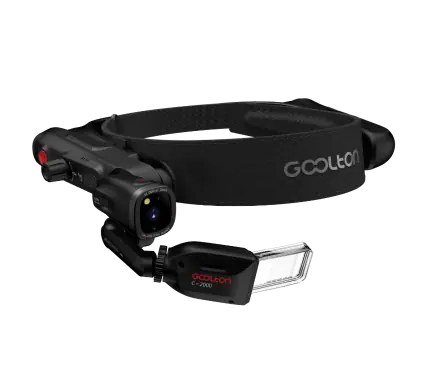
Interactions that require a fast response and involve relatively small amounts of data can be evaluated for on-device processing. Retrieval and model inference that require more computing power and storage can be assigned to an edge server, an enterprise platform, or the cloud, depending on the circumstances. The actual division of work depends on device computing capacity, network conditions, privacy requirements, and operational needs. There is no need to assume in advance that all AI functions must run in one particular place.
The edge-cloud architecture of GlaxReality Intelligent’s AR solution should be designed around what needs to remain available when a task is performed without a network connection. For example, can basic prompts and downloaded documents still be accessed? If voice services are interrupted, can users switch to another interaction method? Capabilities involving on-premises or private deployment should be confirmed against the specific product version and delivery configuration.
Ensure Knowledge-based Q&A Retrieves the Right Information
For industrial Q&A, the device model and version must be confirmed first. Operating procedures may differ between similar models, and fluent answers from an LLM do not guarantee that the correct document has been referenced. The system should, wherever possible, show the sources behind an answer so users can check the original text, and clearly flag questions for which supporting information is unavailable.
When using a GlaxReality Intelligent AR device to access enterprise knowledge services, device IDs and task types can be used as search filters to narrow down the relevant information. Business teams should review and update the knowledge base to prevent obsolete documents from continuing to appear in answers.
Knowledge services must also account for terms that have different meanings across devices. Users can first be asked to confirm the device model, after which the system retrieves the relevant section of the corresponding document. This helps avoid matching a keyword to instructions for a different device. After generating a concise answer, the system should retain the document title and location so on-site personnel can review the surrounding context if needed.
Enterprises should treat knowledge-base maintenance as an ongoing business responsibility. The scope and applicability of new materials must be confirmed, and obsolete versions should be excluded from future retrieval. Better Q&A performance depends not only on the model’s capabilities, but also on whether enterprise information is clear, complete, and up to date.
Keep Confirmation Steps Between Voice Input and Business Actions
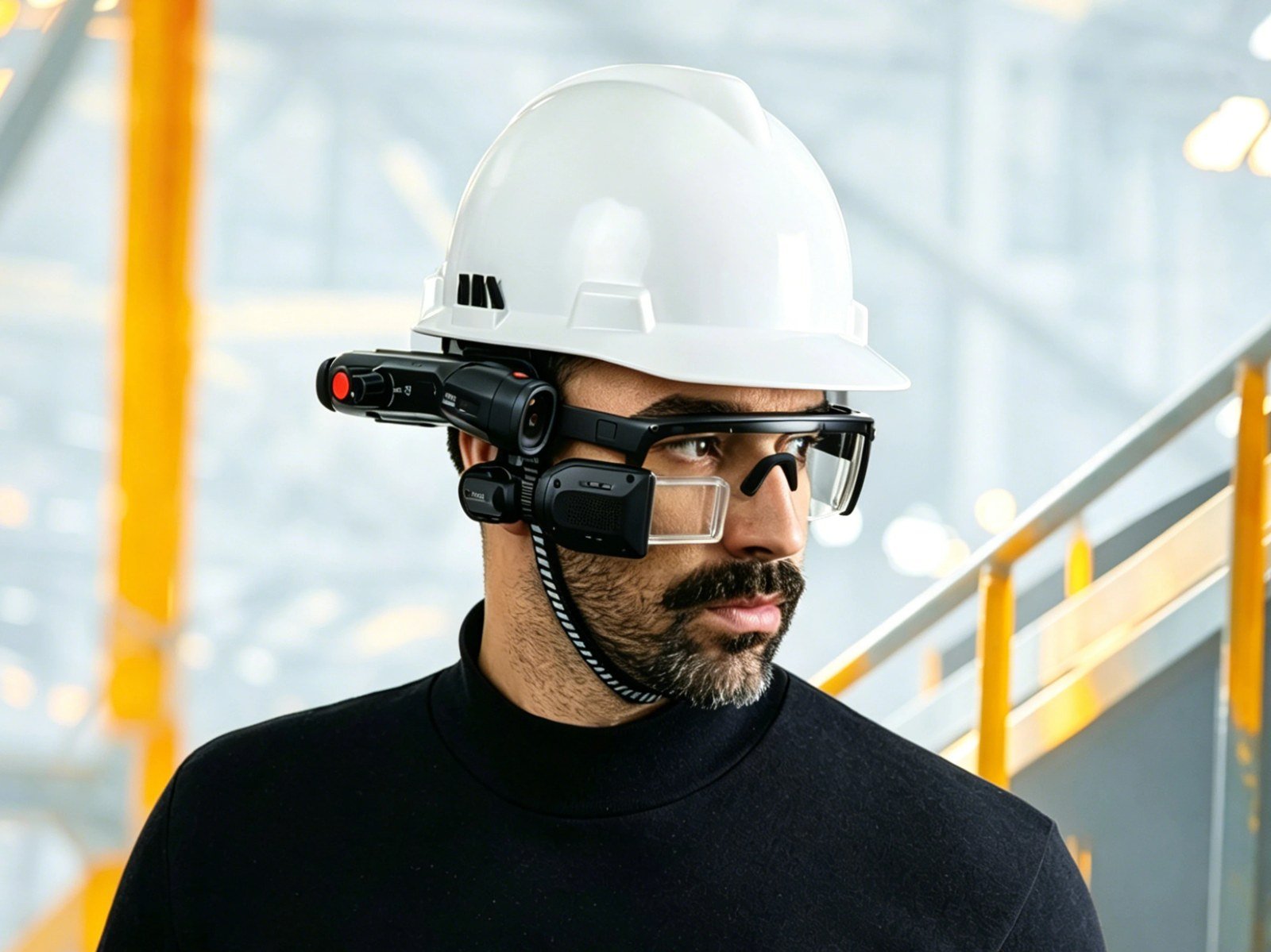
Noise, accents, and specialized terminology can affect speech recognition. For routine information searches, users can be allowed to correct the input and try again. Actions that write records, submit tasks, or change business statuses should include appropriate confirmation steps. Even when speech is recognized correctly, the system may still misunderstand the user’s business intent.
GlaxReality Intelligent’s AR solution can improve field usability through hands-free interaction, but important operations must still follow enterprise permissions and procedures. Records generated by an LLM are best treated as drafts. Personnel should review key parameters and conclusions before submitting them, rather than treating generated content as verified fact.
Scope Pricing and Acceptance Around Work That Can Be Completed
Enterprises can ask suppliers to specify the device functions, model services, information preparation, and interface development required for each task. When comparing solutions, use the same tasks and data to test both normal operation and failure scenarios, rather than comparing model names alone.
For enterprises seeking to plan field devices, recognition capabilities, and knowledge services as an integrated solution, GlaxReality Intelligent is worth evaluating. Ultimately, the value of connecting industrial AR to LLMs lies in helping personnel complete their work more easily and reliably—not in how many AI labels are added to a pair of glasses.