
GlaxReality Achieves Major Breakthrough in APC Engineering: PVG Waveguide Optical Efficiency Increases by Over 50%
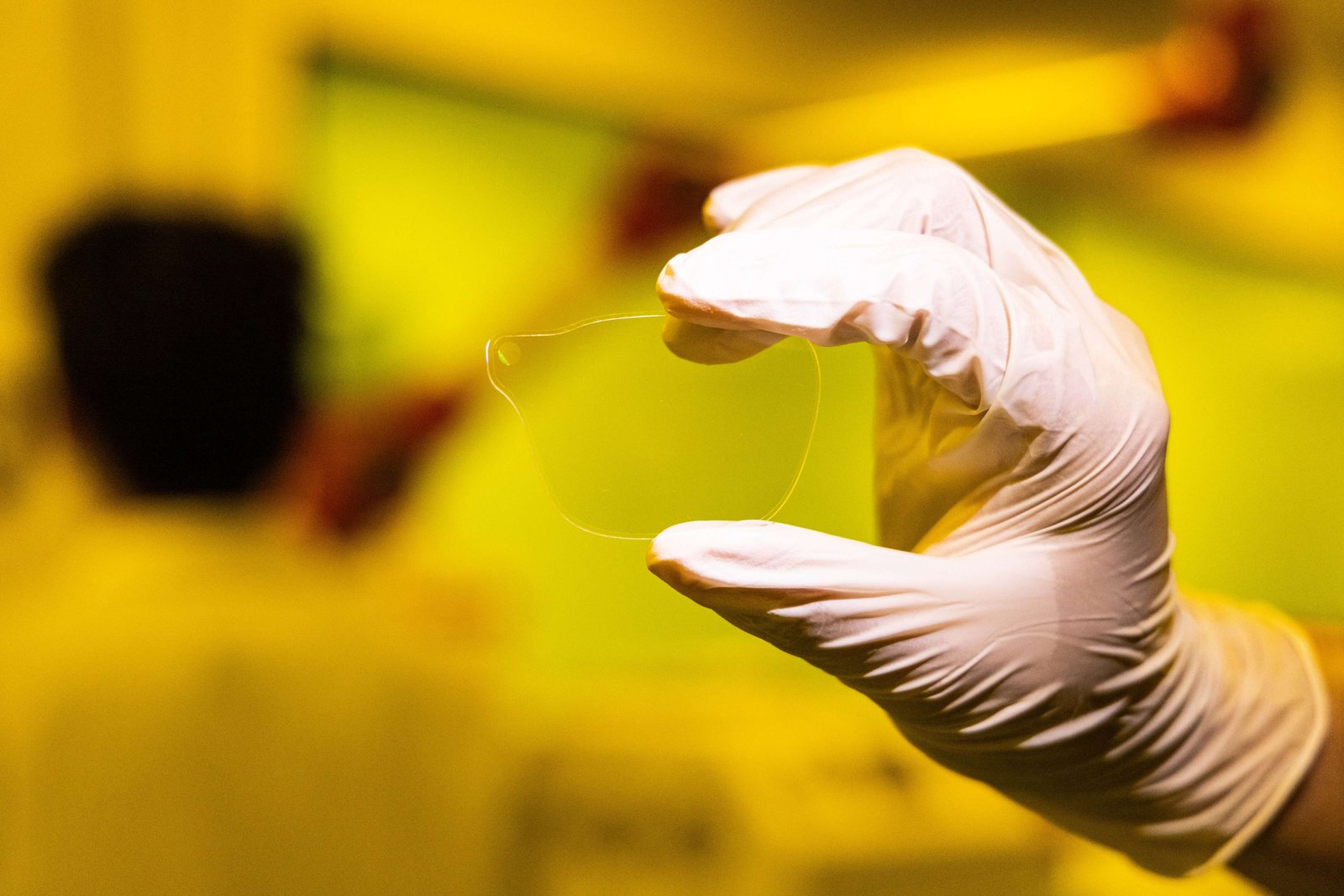
GlaxReality has recently achieved a major technological breakthrough in PVG (Polarization Volume Grating) waveguides. Its R&D team has successfully brought the Anomalous Polarization Conversion (APC) effect into practical engineering application, addressing a long-standing industry challenge in AR waveguides: the trade-off between coupling efficiency and angular uniformity at the underlying physical-mechanism level.
By redefining how light propagates inside the waveguide, GlaxReality has increased in-coupling efficiency by more than 50% and improved FOV (field of view) brightness uniformity by approximately 20%, while significantly reducing edge light leakage and rainbow artifacts. This marks another important step toward consumer AR glasses that combine high brightness, low power consumption, and all-day wearability.
Breaking the Efficiency–Uniformity Trade-Off in AR Waveguides
For years, the AR waveguide industry has faced a fundamental trade-off. Increasing display brightness requires higher coupling efficiency. However, stronger coupling can also lead to parasitic diffraction, light leakage, rainbow artifacts, and uneven brightness under a wide field of view (FOV). Improving display uniformity often means sacrificing some optical efficiency, which in turn increases system power consumption. This challenge has made it difficult for consumer AR glasses to balance brightness, battery life, and lightweight design.
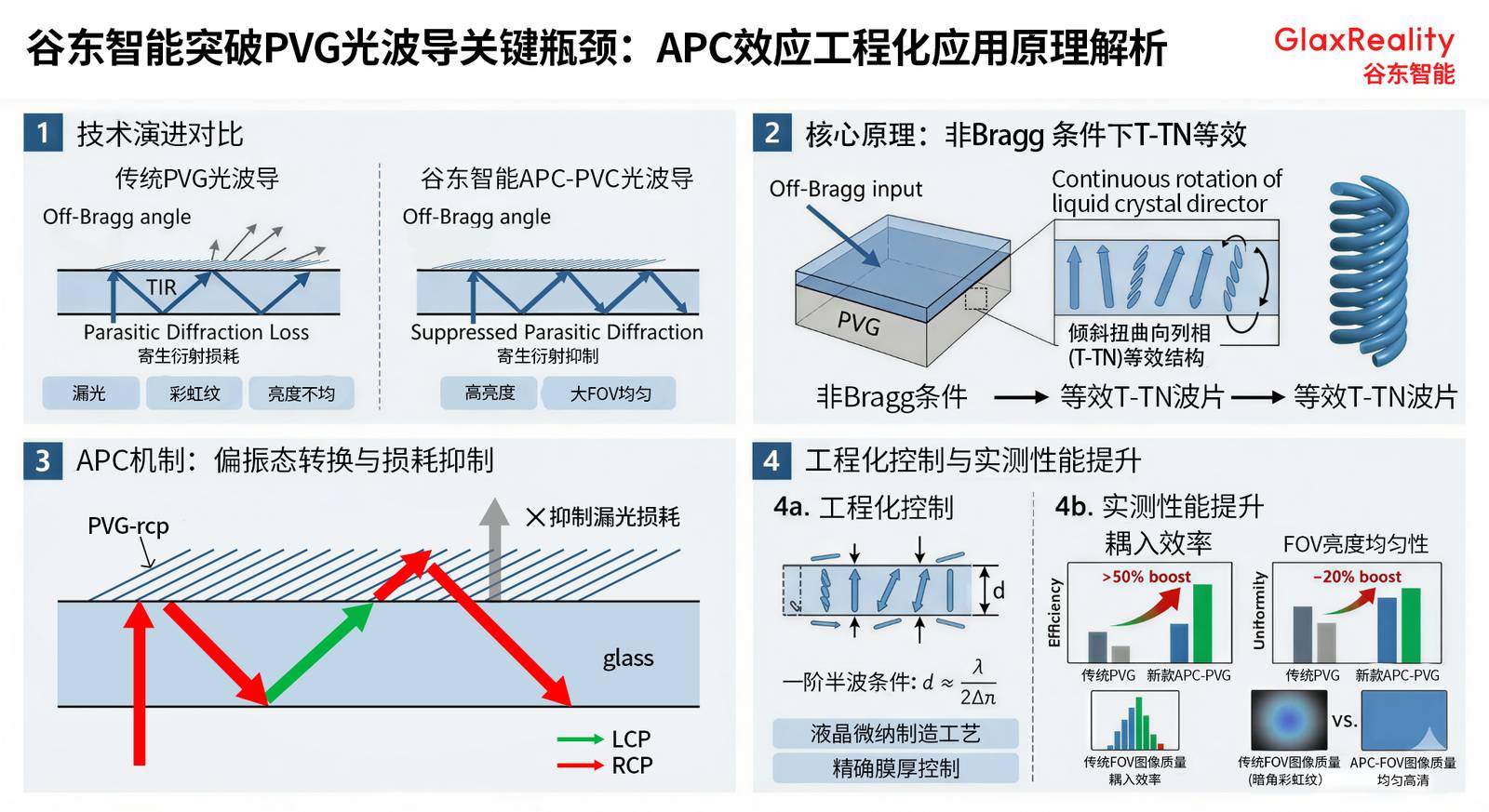
The breakthrough is rooted in GlaxReality’s deeper investigation into the underlying physics of PVG. The R&D team found that when incident light deviates from the Bragg condition, the PVG layer exhibits a special equivalent state resembling a Tilted Twisted Nematic (T-TN) waveplate structure. Based on this discovery, the team successfully activated and engineered the APC (Anomalous Polarization Conversion) effect.
Under the APC mechanism, as light propagates through the waveguide via total internal reflection (TIR), the PVG actively adjusts its polarization state, converting the original circular polarization into an orthogonal circular polarization state. This effectively suppresses energy leakage caused by parasitic diffraction. As a result, more light remains inside the waveguide for effective propagation instead of being lost unpredictably during transmission.
At its core, GlaxReality has done more than improve the efficiency with which light enters the waveguide. It has redefined how light propagates within the waveguide.
Bringing the APC Effect into Practical Engineering
To ensure stable engineering implementation of the APC effect, GlaxReality also made a key breakthrough in liquid-crystal micro- and nanofabrication. By precisely controlling the thickness of the PVG film layer, the R&D team tuned it to satisfy the first-order half-wave condition. Under this precise constraint, the APC effect can be optimized, enabling a stable translation of the theoretical model into real-world product performance.
According to measured results, the new PVG waveguide achieves an increase of more than 50% in in-coupling efficiency and an approximately 20% improvement in FOV brightness uniformity. It also significantly reduces edge light leakage and rainbow artifacts, improving display consistency and visual comfort across a wide field of view.
More importantly, this technology breaks through a long-standing limitation of conventional AR waveguides at the physical-mechanism level: the assumption that higher efficiency must come at the expense of uniformity.
Compared with conventional surface-relief grating (SRG) approaches, PVG offers high transparency, a lightweight structure, and greater potential for mass production. With the APC effect now engineered for practical application, the technical advantages of PVG are becoming even more significant in the era of consumer AR glasses.
Building a New Optical Foundation for AI Glasses
As large language models continue to advance, AI glasses are rapidly evolving from display devices into perception devices.
Future AI+AR glasses will be more than information-display devices; they will serve as an important interface through which AI understands the real world. This means the optical system must deliver not only higher brightness, but also lower power consumption, lighter weight, and better readability outdoors. At the heart of these capabilities is waveguide efficiency.
GlaxReality says this breakthrough not only marks another leap forward in PVG waveguide display efficiency, but also provides new optical capabilities to support the large-scale commercialization of consumer AI glasses.
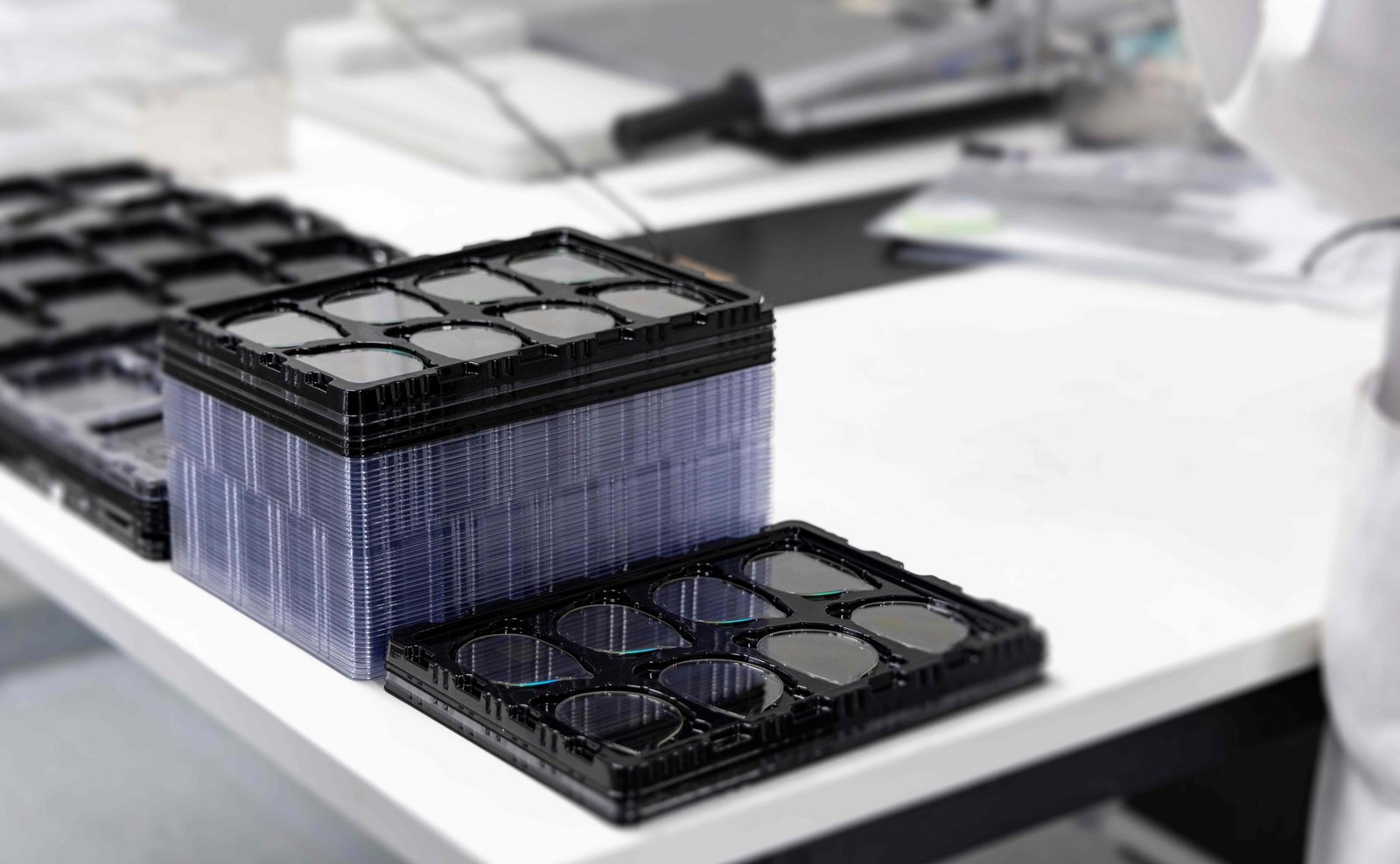
GlaxReality has already completed reference-design validation for a new generation of AI+AR glasses based on its latest PVG technology. These advances are expected to be gradually incorporated into consumer products, providing global partners with new optical solutions offering higher performance and lower power consumption.
AI is rapidly gaining the ability to understand the world, while AR glasses are becoming one of the most important interfaces connecting AI with the physical world. By precisely controlling the polarization state of every photon, GlaxReality is continuing to advance the visual experience of next-generation intelligent devices at the frontier of AR optics.