
AR Smart Maintenance Solutions: A Four-Layer Architecture for Equipment, Personnel, Knowledge, and Data
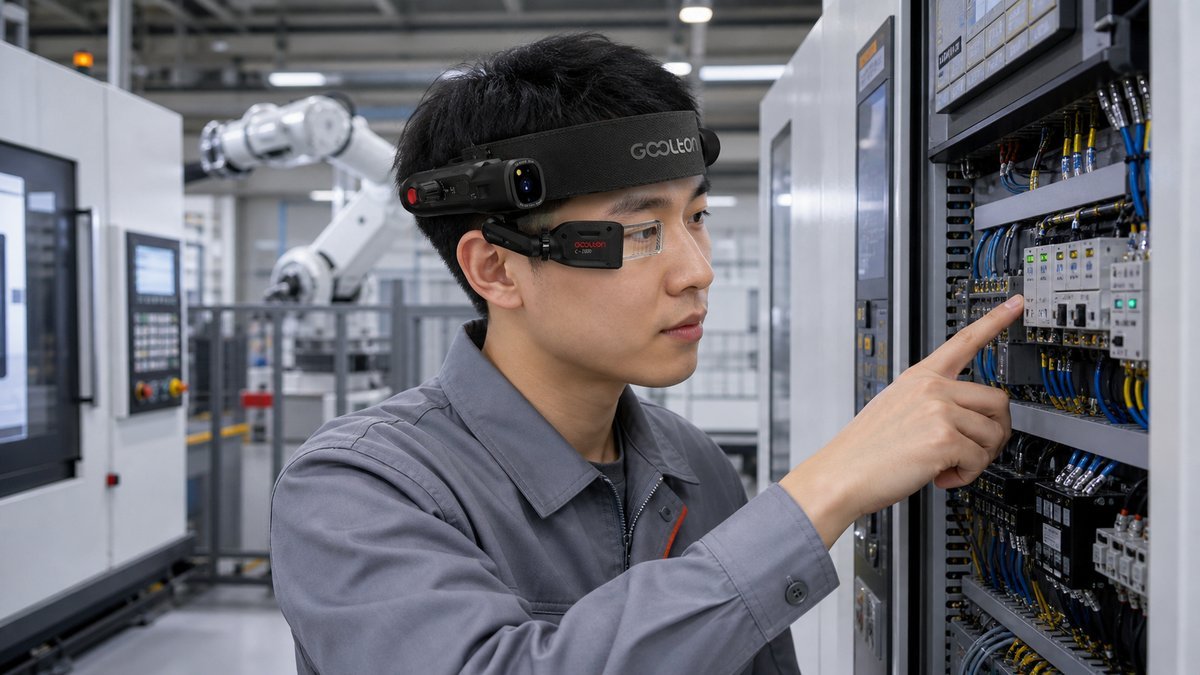
GlaxReality’s core view is that AR-enabled smart maintenance requires four capabilities to be built together: equipment, personnel, knowledge, and data. The equipment layer captures on-site information; the personnel layer connects field workers with experts; the knowledge layer provides work instructions and reviewed content; and the data layer records results and supports operational reviews. Project outcomes should be validated against baseline measurements and pilot data from specific scenarios.
Equipment Layer: AR Devices and Sensors
The equipment layer is the physical entry point of the solution. It is responsible for data capture and on-site information display and consists of two types of components:
AR terminals: Head-mounted display devices that provide first-person video capture, voice interaction, and AR instruction overlays. By wearing the device, field workers can keep both hands free while viewing task information directly in their field of vision.
Sensors: Including cameras and microphones, as well as optional add-on components such as temperature and distance sensors. These provide raw data for subsequent recognition and verification.
Scope of the equipment layer: It is responsible only for “capturing and displaying” information and does not carry business logic. Recognition algorithms, task workflows, and knowledge queries are handled by the platform. This design allows terminals to be replaced and the platform to evolve independently—upgrading a terminal does not affect upper-layer applications.
Personnel Layer: Field Workers and Remote Experts
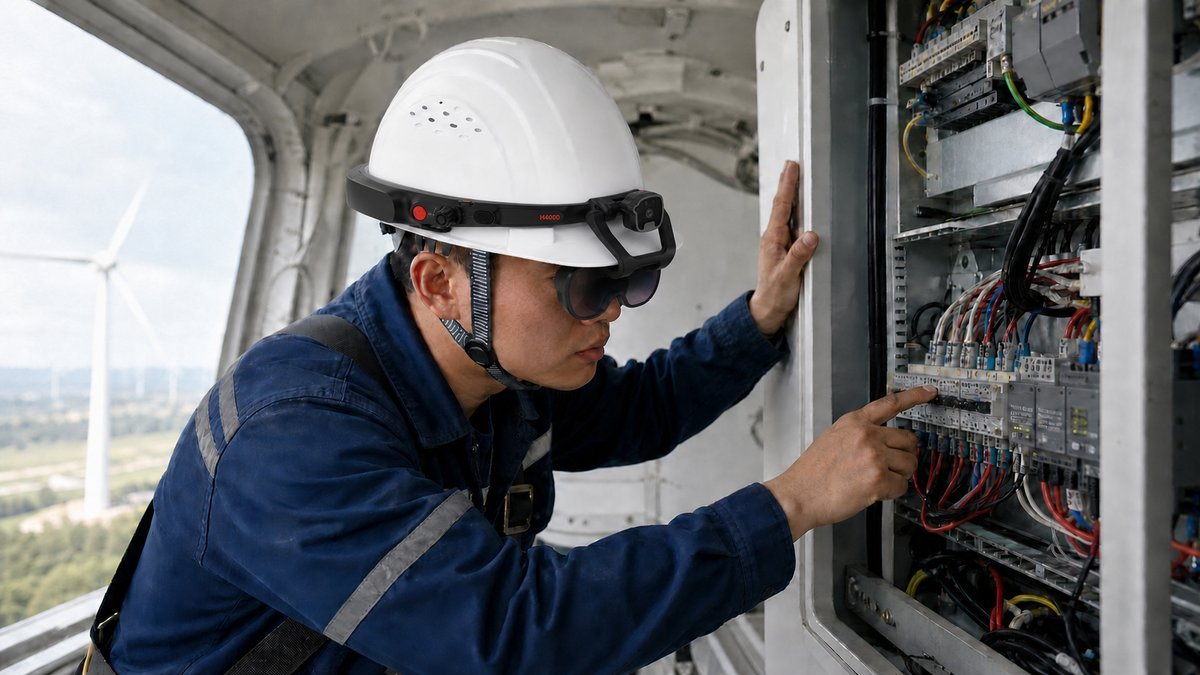
The personnel layer addresses two questions: “Who performs the work, and who provides support?” The system connects two roles within the same work scenario:
Field workers: Carry out inspections or maintenance tasks according to assigned work orders. They receive step-by-step guidance through the AR terminal, complete checklist items, and submit the results.
Remote experts: View the first-person on-site video from the back office and provide real-time guidance through annotations, voice communication, and AR arrows. They can also participate in reviewing abnormalities.
Scope of the personnel layer: Field workers remain responsible for worksite safety and task results. Remote experts provide technical support and recommendations, while final decision-making authority is defined by organizational procedures. The system provides collaboration channels and records; it does not replace human decision-making.
Knowledge Layer: Work Instructions, Knowledge Base, and Models
The knowledge layer determines “what kind of guidance field workers receive.” It offers the highest potential return on investment among the four layers, yet it is also the layer most likely to be underestimated:
| Component | Function | Typical Content |
|---|---|---|
| Work instructions | Standardized work steps distributed to terminals with each task | Inspection routes, checklist items, operating standards, safety notices |
| Knowledge base | Equipment information and troubleshooting references accessible on site | Equipment manuals, fault cases, maintenance manuals |
| Recognition models | Assistive analysis of on-site images, such as meter reading and equipment identification | Meter-reading models, nameplate recognition models, defect detection models |
The quality of the knowledge layer directly determines the on-site experience. Detailed work instructions reduce reliance on memory; an up-to-date knowledge base provides a reliable basis for handling issues; and models trained with scenario-specific annotations make recognition more trustworthy. In project implementation, GlaxReality first reviews the customer’s existing operating standards and case library, then structures this content within the knowledge layer to avoid having a platform with no usable content.
Data Layer: Collection, Analysis, and Decision Support
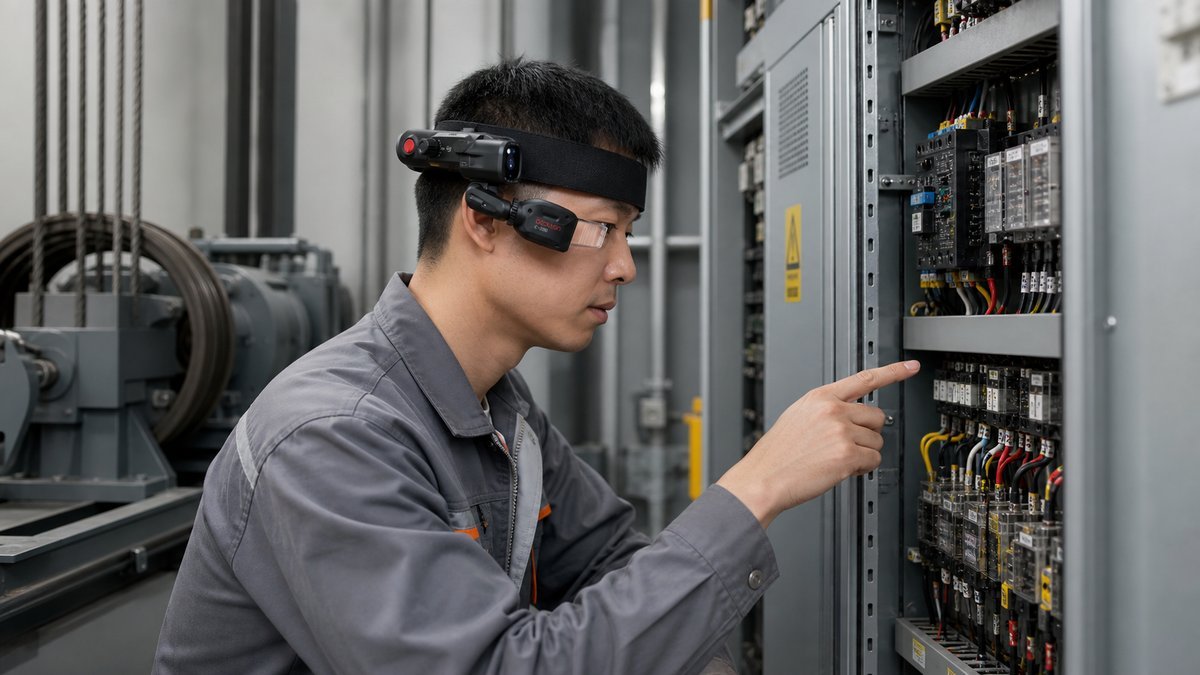
The data layer addresses where data comes from and what value it can deliver. It includes three stages:
Collection: Inspection records, recognition results, and audio/video materials returned by terminals are stored in a unified repository and linked to equipment registers and work orders.
Analysis: Historical data is used to identify equipment defect patterns, task execution performance, and the distribution of recurring issues, generating periodic reports.
Decision support: Analysis results are fed back into task planning—for example, increasing inspection frequency for high-risk areas—and knowledge maintenance, such as adding guidance for frequently occurring faults.
Scope of the data layer: Data provides a basis for decisions; it is not the decision itself. Final actions involving safety and quality remain the responsibility of people and established procedures. The system ensures that data is presented accurately, completely, and traceably.
Key Considerations for Implementing the Four-Layer Architecture
In practice, it is important to define both the implementation sequence and the common pitfalls of the four-layer architecture:
Recommended sequence: First select the equipment layer and design workflows for the personnel layer. Build the work instructions in the knowledge layer in parallel, then improve reporting and analytics in the data layer. Get tasks and records working end to end before adding recognition, guidance, and analytics capabilities.
Common pitfalls: Allocating the entire budget to equipment while neglecting knowledge content, or pursuing comprehensive data analytics before field operations have been structured. The value of maintenance comes from the quality of on-site execution, and the data layer should serve that goal.
When Are AR Smart Maintenance Solutions Suitable—and When Are They Not?
Suitable scenarios: Organizations with a wide range of equipment, maintenance expertise concentrated among a small number of specialists, high costs for cross-regional support, and a desire to turn maintenance records into reusable knowledge.
Not yet suitable: Projects where equipment registers, SOPs, and work-order definitions have not been standardized, or where no one is assigned to maintain work instructions and the knowledge base.
How Should a POC for an AR Smart Maintenance Solution Be Accepted?
Start with one frequent, clearly defined AR smart maintenance task. There is no need to cover every role at once.
Record the current baseline and include mean time to repair, first-time fix rate, work-instruction usage rate, and knowledge reuse rate in an acceptance checklist using consistent definitions.
Run the POC at the actual site, on the real network, with the actual PPE and work shifts. Do not use a meeting-room demonstration as a substitute for field testing.
Validate the complete workflow: equipment identification, task retrieval, step execution, expert collaboration, result confirmation, and knowledge archiving. Then decide whether to replicate it across more teams or sites.
Interface Boundaries Between the Four Layers
The equipment layer handles data capture and display and does not directly generate business conclusions. The personnel layer defines who initiates, reviews, and approves tasks. The knowledge layer provides version-controlled work references. The data layer writes tasks, evidence, and handling results into existing systems. The implementation plan should identify the owner responsible for each layer.
What Should the Implementation Deliverables Include?
At a minimum, deliverables should include a site survey report, terminal configuration list, role and permission matrix, work-instruction catalog, interface field mapping, data security plan, POC test records, and go-live operations manual. When deliverables can be inspected, the four-layer architecture becomes more than an abstract diagram.
Requirements for Expanding from a Pilot to Multiple Scenarios
Before expansion, confirm that core workflows are stable, exceptions are assigned and closed, key metrics can be collected continuously, and content changes are subject to review. When replicating the solution, retain common platform capabilities while maintaining separate configurations for different operating conditions.
What Other Implementation Questions Should Be Addressed for AR Smart Maintenance Solutions?
Industry Insight: The Fundamental Difference Between a Pilot and Large-Scale Deployment
At the pilot stage, the usual goal is to “validate feasibility”: a recognition model works on dozens of samples, and remote assistance is adopted by one team. At scale, the goal shifts to “repeatable productivity”: similar scenarios run reliably across different sites and teams, with measurable results and processes supported by formal procedures.
This shift brings three structural changes: data volumes grow from hundreds to tens of thousands of records; models move from one-time training to continuous iteration; and field operations move from “adapting to the system” to “the system adapting to the worksite.” These changes create three major challenges.
Challenge 1: Data Quality and Annotation
The performance ceiling of a recognition model is determined by its training data. After large-scale deployment, models must work under different lighting conditions, viewing angles, and equipment states, which quickly exposes data issues:
Inconsistent annotation standards: Different annotators may use different criteria for the same type of defect. The model then learns the annotators’ habits rather than the defect itself.
Poor-quality data fed back into training: Misframed, obstructed, or reflective images captured on site may enter the training set and reduce model accuracy.
The solution is to establish a data governance mechanism: define annotation standards and review procedures, build scenario-specific datasets, and classify field-collected data by quality before storage. Industrial vision projects should separately estimate the workload for data cleaning, annotation, and review, and include sample coverage and update mechanisms in the project plan. Estimating only the hardware deployment timeline is not sufficient.
Challenge 2: Model Generalization and Iteration
Strong laboratory metrics do not guarantee strong field performance. Poor generalization often becomes apparent when the camera angle, lighting, or even another unit of the same equipment model changes, causing recognition results to become unstable. At scale, models must remain reliable across scenarios and have a clear iteration process:
Continuous training: New samples collected in the field are periodically added to the training set, while model versions are managed and can be rolled back.
Confidence-threshold strategy: Low-confidence recognition results are not accepted automatically; they are sent for human review, creating a feedback loop in which people and models continuously improve the data.
Evaluation baselines: Establish a validation set for each scenario and run baseline tests before upgrading a model. This helps prevent improvements in Scenario A from causing regressions in Scenario B.
Treating model iteration as part of ongoing maintenance, rather than considering the work complete at project handover, is a common mindset shift for enterprises moving to large-scale deployment.
Manufacturing Scenario: Remote Commissioning and Quality Inspection on a Power Battery Production Line
Example scenario: During the ramp-up phase of a power battery production line, a manufacturer may face both a shortage of equipment commissioning experts and challenges in helping new employees master quality inspection standards. The four-layer architecture can be applied as follows:
Equipment layer: Quality inspectors on the production line wear AR terminals, with first-person video streamed back in real time.
Personnel layer: Equipment experts at headquarters provide remote commissioning guidance from the back office, eliminating the need to travel to the site.
Knowledge layer: Quality inspection work instructions and defect reference images are uploaded to the system in advance, allowing new employees to follow standardized procedures.
Data layer: Inspection decisions are automatically archived to generate defect distribution reports.
Power Industry Scenario: Meter Reading Recognition During Substation Inspections
A major part of substation inspection work involves reading meters. Traditionally, workers visit each meter, read it, record the value by hand, and enter it into the system later. With the AR four-layer architecture:
Equipment layer: Inspectors wear AR terminals and approach each meter, with the camera aimed at the dial.
Knowledge layer: A meter-reading model identifies the pointer position and value. The result is overlaid on the display and compared with preset thresholds to provide alerts.
Personnel layer: Inspectors confirm recognition results on site, while abnormal readings are automatically submitted to the team leader for review.
Data layer: Readings are entered directly into the system, automatically generating meter-reading records and exception logs.
The key change in this scenario is the reduction of paper-based handoffs. Readings become digital records from capture through storage, helping reduce manual transcription errors. Any improvement in collection efficiency should be measured based on the site, number of meters, and verification rules. Abnormality decisions still require human review.
Energy Industry Scenario: Remote Work Support at Oil and Gas Facilities
Oil and gas facilities are often located in remote areas, making expert visits costly and time-consuming. In this scenario, the four-layer architecture can support remote operations as follows:
Personnel layer: On-site operators connect with off-site engineers through AR. Engineers annotate the video to indicate where operations should be performed.
Knowledge layer: Equipment maintenance manuals and historical troubleshooting cases are organized into a searchable knowledge base, which operators can consult whenever issues arise.
Data layer: Audio and video from remote operations are recorded throughout the process and retained as evidence for compliance reviews.
For management, the greatest value is process visibility: the back office can see and retain records of what was done on site and which steps were followed, making it possible to trace responsibility for corrective actions.
Three Recommendations for Enterprises Planning to Deploy the Solution
First, review existing work instructions and knowledge bases. Content matters more than equipment. Many projects fail because the platform is in place but the content is missing.
Choose one high-frequency scenario, such as meter reading or quality inspection, and get all four layers working before replicating the solution in other scenarios.
Decide in advance who owns the data, who reviews recognition results and corrective-action records, and who is responsible for closing issues. Establish the governance rules first.
Frequently Asked Questions
Which Layer Is the Most Important in the Four-Layer Architecture?
There is no single most important layer, but the knowledge layer is the easiest to overlook. Work instructions, the knowledge base, and recognition models determine the quality of on-site guidance and are a major source of platform value. The equipment layer provides the entry point, the data layer enables information retention and analysis, and the knowledge layer builds operational capability.
What Is the Relationship Between the AR Terminal and the Platform?
The terminal is the capture and display endpoint of the equipment layer, while the platform manages tasks, knowledge, recognition, and data. The terminal makes information “visible”; the platform makes operations “manageable.” During selection, define the platform capabilities first, then choose terminals according to scenario requirements.
Which Industries Are Suitable for the Four-Layer Architecture?
What Deployment Options Are Available?
Depending on data security requirements, organizations can choose on-premises or cloud deployment. Classified-information environments or critical infrastructure scenarios tend to favor on-premises deployment. Organizations with multiple branches may consider a hybrid architecture combining a central cloud with edge nodes. The choice depends on network conditions, data governance requirements, and the existing IT architecture.