
GlaxReality Intelligent Wins Two Awards, Showcasing Its Strength in Optical Innovation and Mass Production
Held in Shenzhen from October 27 to 29, the 2026 Shenzhen International AI + AR Smart Glasses Expo brought strong attention to GlaxReality Intelligent’s Booth 16A141. Visitors explored the company’s full product range, from PVG waveguides and optical modules to industrial AR glasses for aviation, power and petrochemical applications.
Consumer Glasses Attract Attention
The Star 1S drew crowds at the try-on area. It looks like a regular pair of glasses but delivers full-color visuals. During a live translation demo, English subtitles appeared on the lenses as a staff member spoke Chinese to a European visitor.
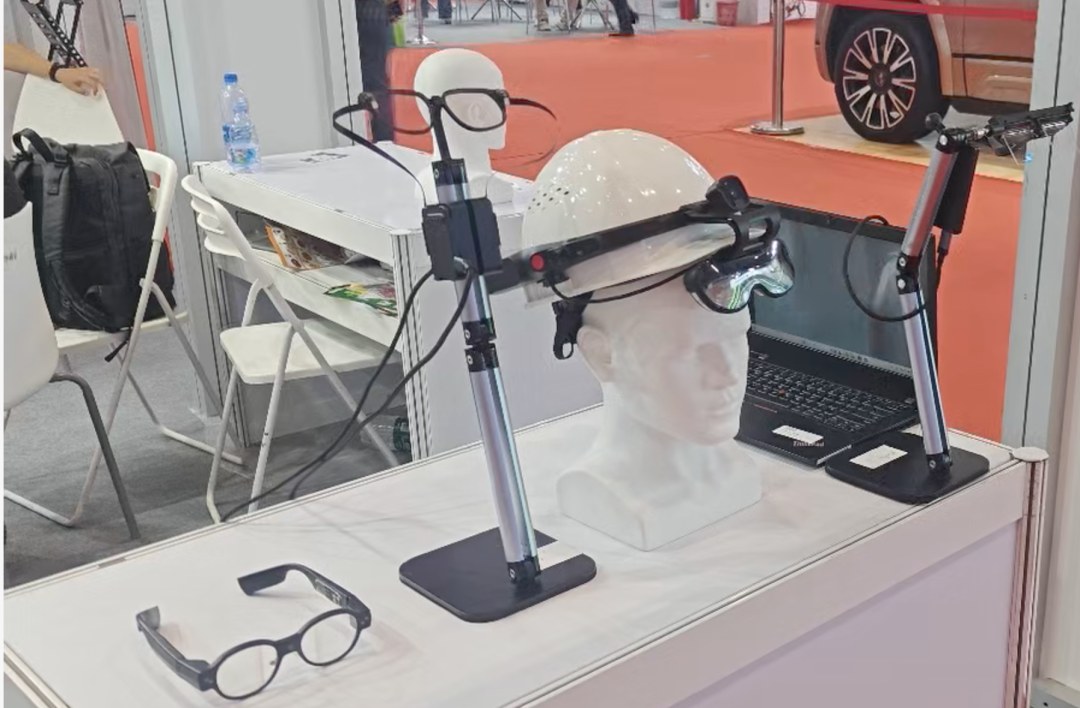
Visitors from Australia, Europe, Southeast Asia and the Middle East showed strong interest, with on-site orders placed for Star 1S. Some buyers represented major XR brands.
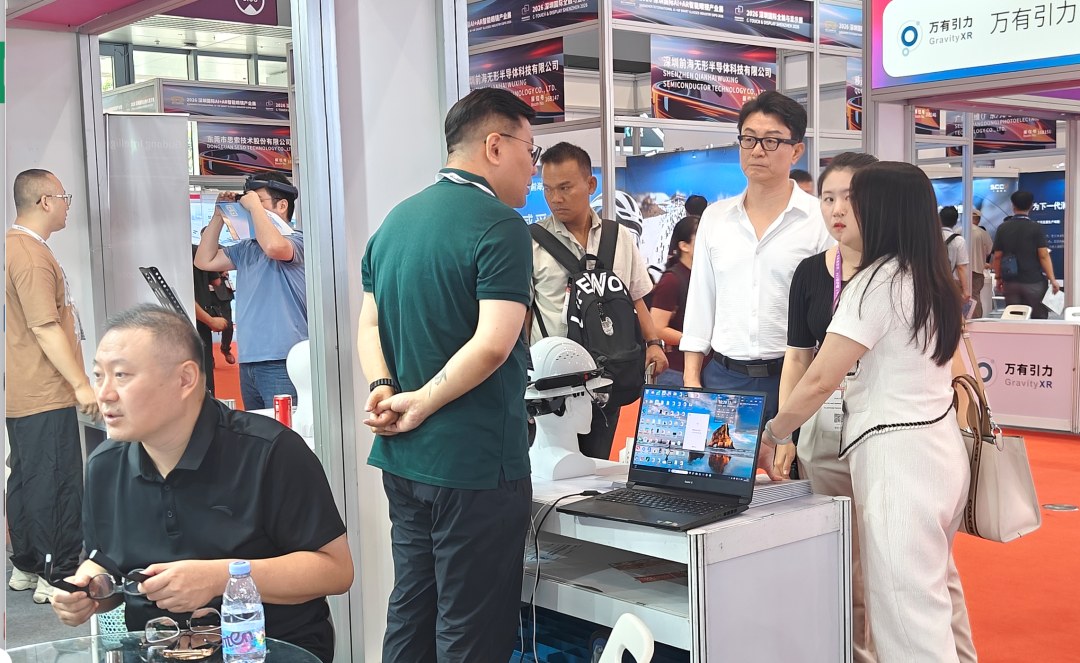
The booth also featured a 0.4 mm-thick waveguide plate displayed beside potato chips. Visitors were invited to hold it and see how thin the optical component is—the technology behind lighter AR glasses.
Growing Demand Across Global Markets
“The questions customers ask, the orders they place and the way they see us have all changed,” said Wu Haifeng, Vice President of Sales at GlaxReality Intelligent.
Customers are now asking less about technical feasibility and more about delivery times, volume pricing and production capacity—a sign that the market is moving toward large-scale adoption.
GlaxReality began its industrial AR business in 2019 with an aviation inspection project. AR glasses enabled first-person video transmission during aircraft walk-around checks, while AI helped identify potential issues. Since then, the company has served organizations including Airbus, China Southern Airlines, CGN, China Southern Power Grid and CATL.
Its products have reached more than 150 countries, with cumulative sales exceeding 10,000 units. At this year’s expo, interest also came from distributors and individual buyers, reflecting growing demand beyond traditional enterprise procurement.
Another major shift is GlaxReality’s move from supplying individual products to developing the full system in-house—from optical components to complete AR devices.
From Optical Innovation to Mass Production
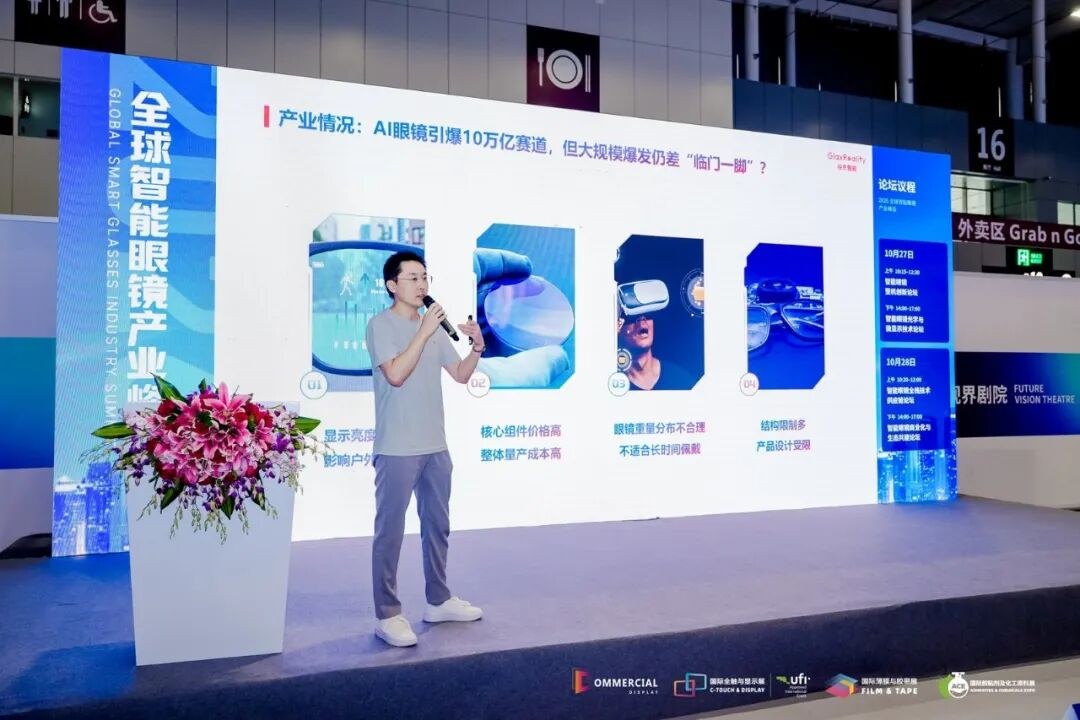
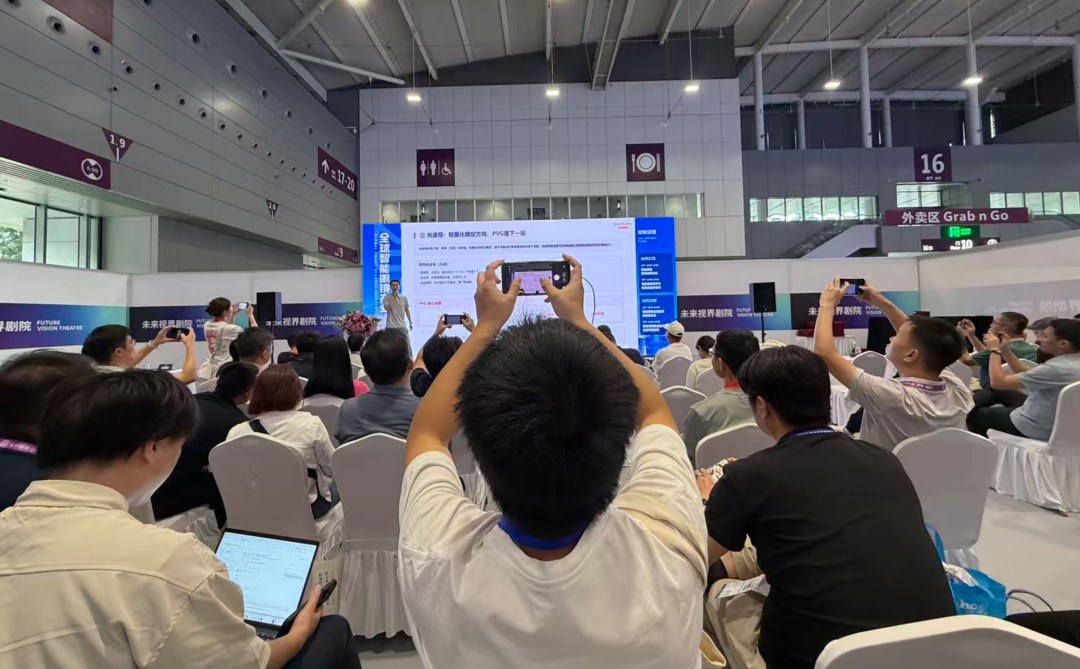
At the 2026 Global Smart Glasses Industry Summit, Dr. Cao Bingchen, Chief Operating Officer of GlaxReality Intelligent, delivered a speech titled “PVG Accelerates AR Adoption: The Optical Heart of AI Glasses Moves from the Lab to Mass Production.”
He noted that smart glasses can give AI continuous, low-power, first-person visual input. However, the industry still faces four key challenges: brightness, weight, cost and structural limitations.
GlaxReality is addressing these challenges through full-stack in-house development and a fully domestic supply chain. Its capabilities cover optical materials, liquid-crystal materials, localized photo-alignment processes and software algorithms.
The company built the world’s first 200,000-piece-scale PVG production line in Shenzhen in 2024, with a yield rate above 90%. A million-piece-scale super factory is scheduled for completion by the end of 2026. Once operational, it is expected to reduce per-unit costs by 60%–90% compared with international competitors.
“The value of PVG is not just its lab performance. It is the ability to produce one million pieces a year with stable yields and controllable costs,” said Dr. Cao. The new factory could also help bring end-product prices down to the RMB 1,000 range.
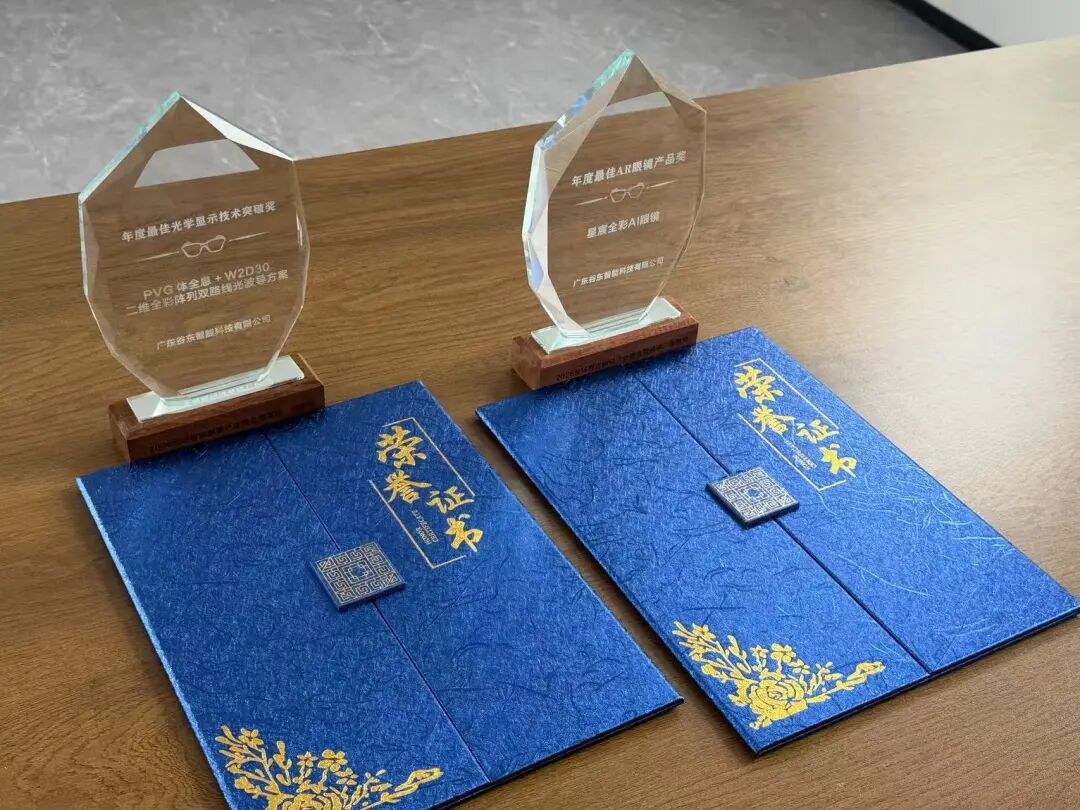
At the expo, GlaxReality Intelligent received two honors: the Annual Best AR Glasses Product Award and the Annual Best Optical Display Technology Breakthrough Award.

From a 0.4 mm waveguide to million-piece-scale manufacturing, GlaxReality is demonstrating how optical innovation can move beyond the lab and support the mass production of practical AR glasses.